
Meuse Gateway
Dinant is a narrow Meuse gateway where the river, cliffs, bridge, station, and onward connections make sense for either a focused day or a deeper regional trip.
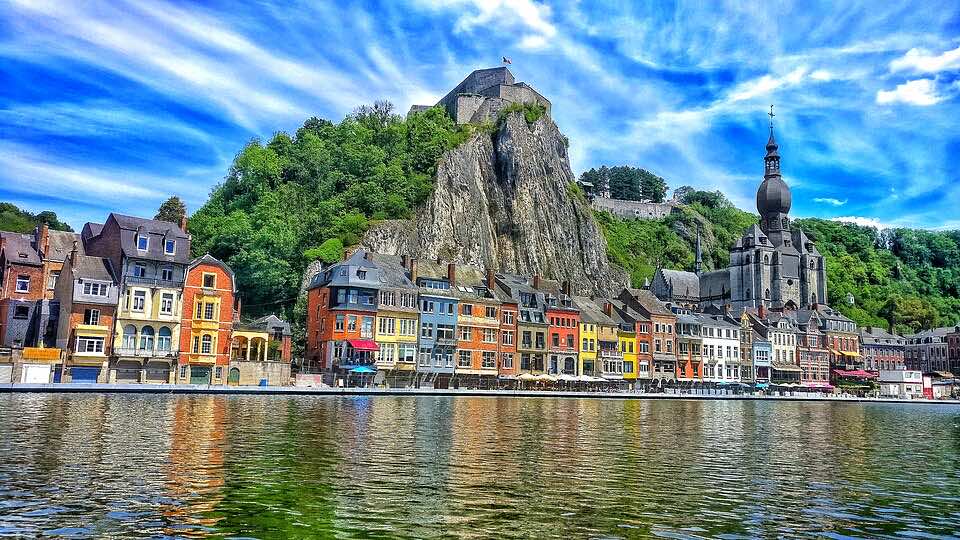
Photo: desiderata12 / CC BY-SA 4.0
Dinant and the Meuse travel guide
Plan Dinant around the Meuse, the Citadel, the collegiate church, saxophone history, Leffe, and at most one well-chosen nearby extension.
Start here
Dinant is compact, dramatic, and easy to misunderstand. The best version is not a frantic Ardennes sampler. It starts with the station, Meuse riverfront, Collegiate Church, Citadel, Charles de Gaulle bridge, Sax identity, and one carefully chosen extension if the trip has enough time. Checked 10 September 2026: the cable car is closed for renovation; the Citadel remains open.
At a glance
Dinant is a narrow Meuse gateway where the river, cliffs, bridge, station, and onward connections make sense for either a focused day or a deeper regional trip.
The Citadel, Collegiate Church, cliffs, bridge, and riverfront create Dinant's main axis and should come before extra activities.
Dinant can work as a rail day when you keep to the station, one main axis, a safe return margin, and no more than one additional activity.
Adolphe Sax and Leffe give Dinant cultural and evening identity beyond scenery, but they should support the river-city frame rather than turning the trip into a novelty or beer stop.
Caves, Freyr, river activities, and nearby castles can improve an overnight or car trip, but they do not turn Dinant into the whole Ardennes.
Dinant's dramatic scenery and difficult history need restrained language, with wartime or serious context separated from scenic excitement and attraction-list pacing.
Plan the trip
An arrival guide for deciding when Dinant is a clean Brussels rail day, when Namur helps, and when the river-city plan needs overnight margin.
One NightA practical one-night sequence that protects the Meuse axis, Citadel timing, riverside evening, and one gateway extension without overloading the stay.
StayCompare station access, riverfront stays, the old centre, Leffe-side evenings, and quieter bases along the Meuse.
Civic AxisA core-axis guide for understanding Dinant's cliff, fortress, church, bridge, riverfront, and station-to-center practicality before adding extra activities.
Sax + LeffeA culture-and-evening guide for using saxophone identity, Leffe context, and the riverfront to support a fuller Dinant route.
GatewayChoose one cave, castle, river activity, or deeper Ardennes extension without trying to cover the whole region from Dinant.
Christmas MarketAn evidence-led Dinant winter guide for an event planned in December 2026, without inventing dates not yet published.
Choose Dinant when
| Choose this | When it fits | Watch the tradeoff |
|---|---|---|
| Rail day | You want station, riverfront, church, Citadel, bridge, and one relaxed pause. | Do not add caves, cruise, Leffe, Freyr, and deeper Ardennes all at once. |
| One-night Dinant | You want the riverfront evening and one second-morning extension. | The value is margin, not a larger checklist. |
| Culture and evening | Adolphe Sax, Leffe, and the riverside should make the city feel complete. | They should support the Meuse axis, not replace it. |
| Gateway extension | You want caves, Freyr, kayaking, or a wider Ardennes trip. | Choose one extension or move to an Ardennes base. |
Practical answer
Dinant can be a Brussels rail day, but the best version protects the riverfront, church, Citadel, and return margin before adding caves, Leffe, or Ardennes ambitions.
You want a focused river town with a cliff, Citadel, church, Sax identity, and one clear evening or extension.
You want to sample the whole Ardennes, caves, castles, kayaking, beer, and viewpoints in one rail day.
Official sources